Profile Craft
Part of Professional audience development
Finding and following relevant industry discussions
Find professional discussions worth following, decide when to contribute and turn recurring questions into useful content.
Find discussions where people describe the decisions, constraints and questions your intended audience faces. Use LinkedIn search and relevant professional association websites to discover them, then keep listening notes to decide what to follow, where to contribute and when to stay out.
Select discussions for their substance
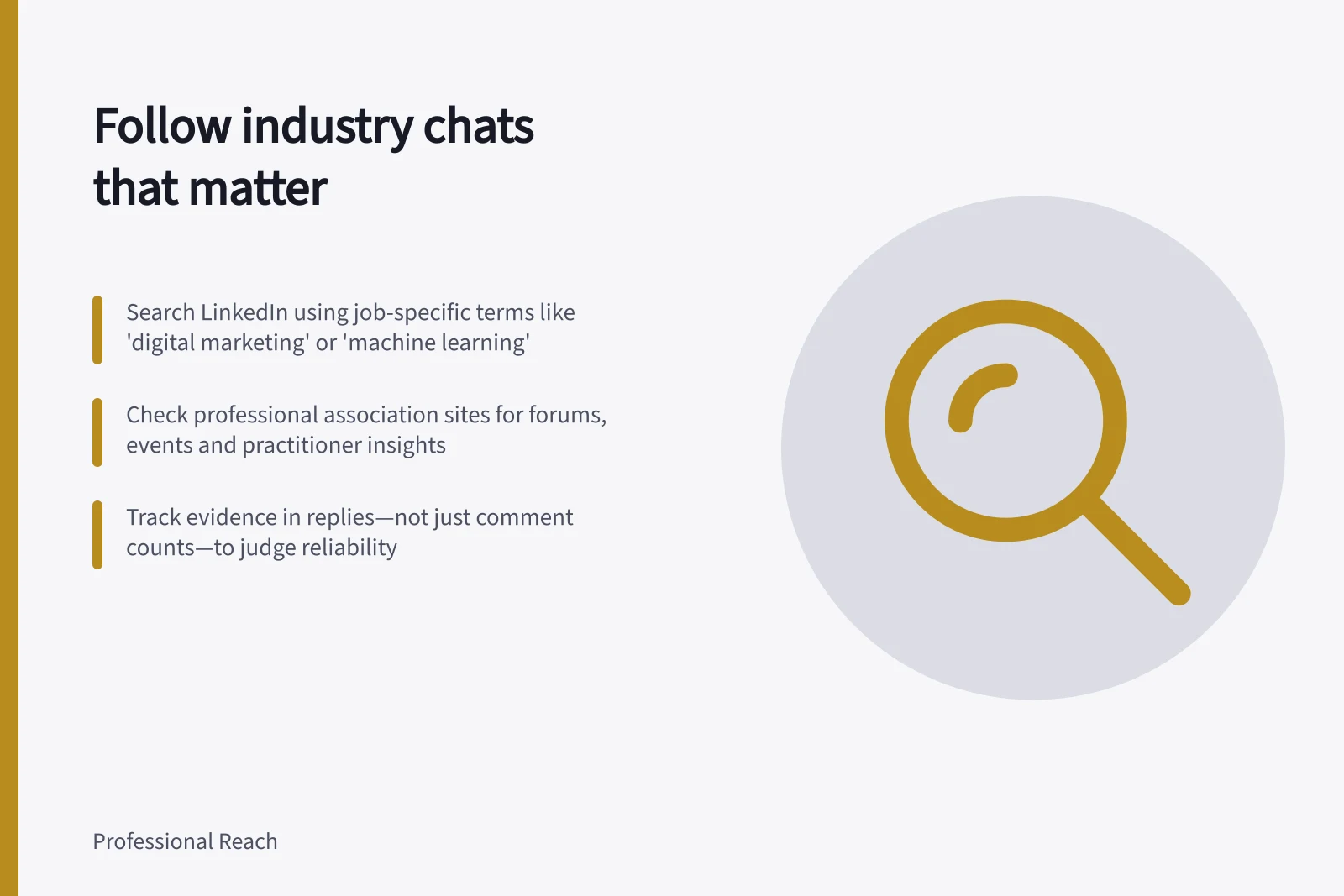
On LinkedIn, search for public posts using terms drawn from the work problems or professional skills you want to understand. You can also search for an organisation's Page or a skills Page; Machine Learning and Digital Marketing are examples of skills Pages. Following a Page brings its posts into your homepage feed.
Check the website of a relevant professional association as another starting point. Associations bring together people in the same or similar fields; their websites may offer forums, focus groups, events, research or publications. Choose subjects tied to your audience's work, then look for practitioners, professional organisations, customers who publish openly and specialists with a different perspective.
Assess the discussion, not just its activity. Is the post making a factual claim, asking for experience or describing one organisation's decision? Do replies add evidence or exceptions, or only agreement? A lively comment count does not make a thread representative of an industry.
Look for enough context to judge where a person's experience comes from and whether factual claims have supporting evidence. A profile or job title alone does not establish that a claim is reliable. Treat unsupported claims as unverified, and treat one complaint as one account until broader evidence appears.
Decide whether to follow, comment or leave it alone
Following someone on LinkedIn lets you see their public posts and articles in your feed without sending a connection invitation; you can unfollow at any time. Following an organisation's Page or a skills Page adds its posts to your homepage feed, and LinkedIn allows members to follow up to 1,000 Pages.
Follow a person or Page when its updates help you understand decisions your audience faces. Before following a Page, note that your public profile information is visible to its admins and that information about Pages you follow may be used for relevant ads; you can change your advertising preferences.
Comment only when you can add relevant, supportable information. Stay out when the thread is a dispute you cannot verify, the replies already cover your point or your contribution would disclose confidential details.
An organisation's LinkedIn Page can react to or comment on public posts found in the feed or through search. Only a super admin or content admin can do this as the Page, so check whether you are speaking as yourself or for the organisation.
LinkedIn following limits and visibility
- Following someone does not require a connectionYou see their public posts in your feed
- Your profile info is visible to Page adminsWhen you follow an organisation's Page
- Followed Pages may inform ad targetingYou can adjust preferences in privacy settings
Turn listening into a useful answer
Use one row per useful thread: date; LinkedIn post link; subject; question or claim; poster's stated setting; evidence and counterpoints in replies; what remains unknown; whether the question recurs elsewhere; and next action. For example, “How do regional teams keep approval records current when several suppliers change details?” records a question to investigate, not proof of a wider industry trend.
Return to any evidence linked in the post or replies before relying on a factual claim. If the thread offers no supporting evidence, mark the claim as unverified and do not repeat it as fact. Keep separate what you can answer, what needs checking and what lies outside your expertise.
After several discussions, look for questions recurring across different people and settings. Review your reading list regularly; if it is dominated by competitors and marketing commentators rather than practitioners, add sources closer to the work.