Employee Advocacy
Part of Professional social community interaction
Responding to criticism without turning a discussion into a pitch
Address criticism in a professional social discussion with a specific answer, clear limits and a useful follow-up instead of a sales pitch.
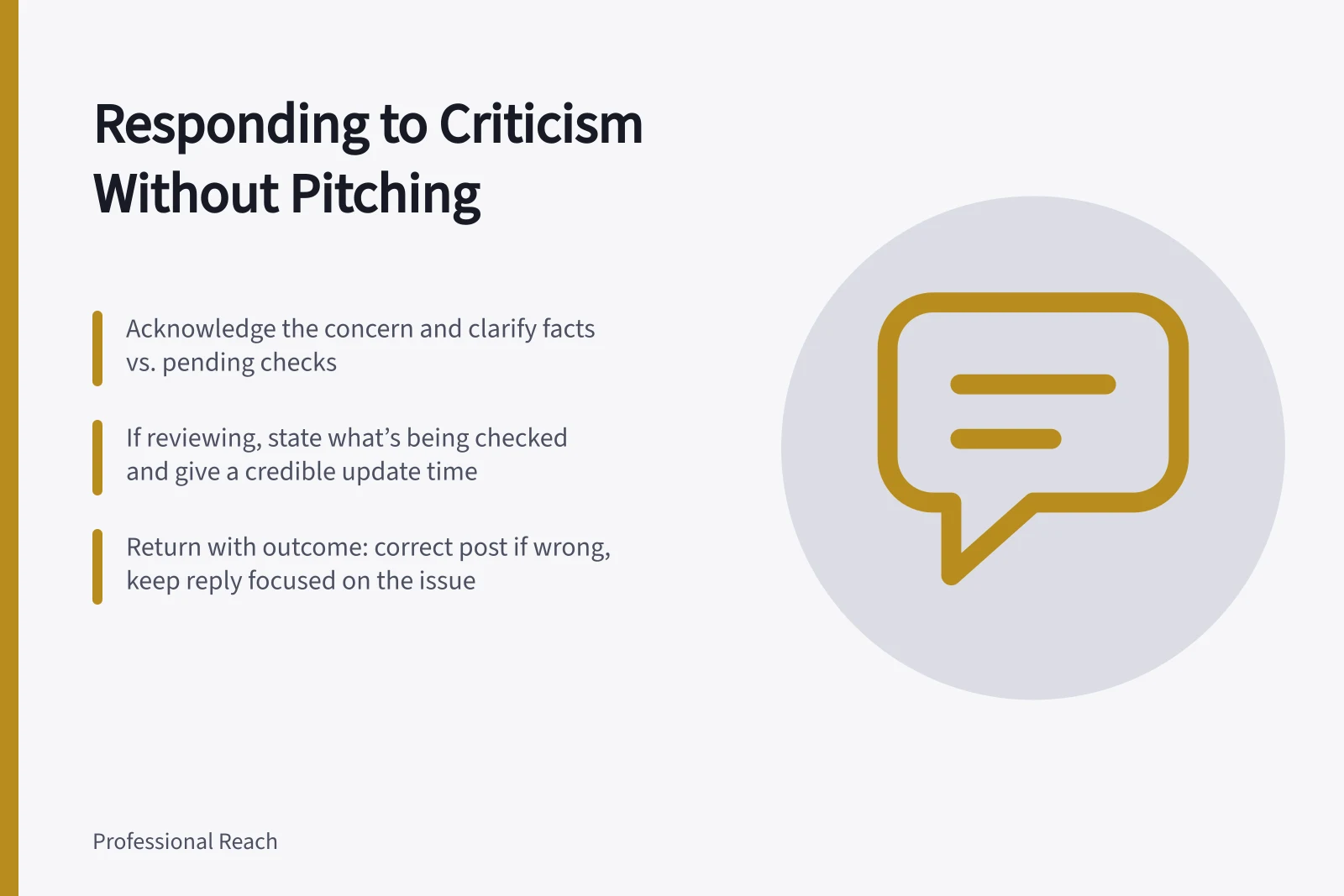
Answer the concern raised. Acknowledge what you understand, separate verified facts from matters still being checked, and offer a next step that helps resolve the issue. A service description does little to answer criticism about a mistake, limitation or experience.
Identify the claim
Is the person disputing a public statement, describing an experience, asking about a process or challenging a judgement? Each calls for a different reply. A sharp comment is not necessarily a customer complaint, and a reported experience should not be treated as fully established before it is checked.
If you have an approved answer, give it directly. If the matter concerns an individual account, acknowledge it publicly without asking for account details in the thread. If facts are still under review, say what you are checking and give an update time only when you can credibly commit to one.
A hypothetical reply might read: “You are right that the post did not explain how exceptions are handled. The process differs for changes that affect an existing agreement. We are checking whether the published guidance makes that distinction clear and will update it if needed.”
Leave the sales pitch out
Do not use criticism as an opening to list features, offer a demo or seek a lead. Answer the public issue first. If the person later asks about a service, respond to that request separately. Suggest a private channel only for a specific reason, such as discussing details that should not be shared publicly.
Choose an apology that fits what you know. An expression of concern can acknowledge someone's experience, but it cannot replace an explanation of what happens next. Equally, a general claim that other customers are satisfied does not resolve this person's point.
What to Avoid When Responding to Criticism
- Do not doUse criticism as a chance to pitch features, offer a demo, or seek leads.
- Do not doMake general claims like 'other customers are happy' to dismiss concerns.
- DoRespond directly to the issue raised, using verified information.
- DoUse a sincere apology that reflects the experience shared, not just a template.
Disagree with precision
If the criticism rests on a different assumption, state yours and explain the relevant evidence or limit. A recommendation that applies only to small teams should say so. Avoid repeating an unverified broad claim simply to rebut it.
Keep respectful disagreement visible. If conduct crosses a safety boundary, use the appropriate moderation route; still address any substantive question that remains.
Return with the outcome
If you said you would check something, return with the answer or an honest status update. Correct the original post if its wording was wrong. LinkedIn permits edits to shared post text. A short public follow-up helps later readers understand the outcome even if account details were handled privately.
Before sending, remove sentences that promote the organisation without answering the concern. The remaining reply should name the issue, state what is known and make the next step clear.
Key Guidelines for Public Responses on LinkedIn
- Public follow-up required
- If you commit to checking something, return with an outcome.
- Post edits allowed
- LinkedIn permits corrections to shared post text.
- Private channels only for sensitive matters
- Suggest private discussion only when details should not be public.