Employee Advocacy
Part of Professional audience development
Building connections with a genuine professional context
Decide when a LinkedIn connection is appropriate, explain the real context and keep the relationship useful after acceptance.
A useful professional connection has a reason both people can recognise. It may continue a conversation after a meeting, bring former colleagues back into contact, or let peers with shared work stay in touch. Before sending an invitation, explain the relationship in one truthful sentence.
Start with the relationship you have
Think about what has actually happened. Did you work together, meet at an event, collaborate in a professional group or exchange ideas directly? Those are clear contexts. Merely appearing in a search result or fitting a target account list does not establish one.
LinkedIn distinguishes following from connecting. Following lets you read a person's public posts without asking for a mutual relationship. Connecting creates a first-degree relationship with wider messaging and profile access.
LinkedIn's guidance says to send invitations to people you know and trust. If an unfamiliar specialist publishes work you value, follow and learn from it. Do not use a connection request to imply an acquaintance that does not exist.
A genuine context need not be impressive. “We spoke after the Melbourne workshop about handover records” is enough if that conversation occurred. Do not manufacture shared interests from a profile or describe someone as a peer when you have not engaged with their work. A brief, accurate reminder is more useful than praise that could have been sent to anyone.
Choose a reasonable next step
Ask what the recipient gains from accepting. You might want to continue a specific exchange, share a relevant professional perspective over time or make it easier to contact each other about work already discussed. If your real purpose is an immediate sales request, say that plainly through an appropriate channel rather than disguising it as networking.
Make the invitation proportionate to the relationship. A person you met recently may welcome a concise note identifying where you met. An established colleague may need only a reminder if your profile has changed.
If you lack a credible reason to connect, following their work or participating in an open discussion may be the better first step. Participation does not create entitlement to their attention.
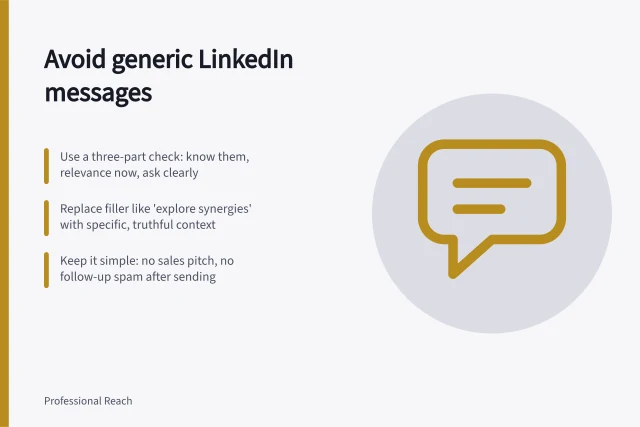
After an invitation is accepted, avoid treating acceptance as permission for a pitch. Continue the subject that made the connection useful. If you promised a resource, send the relevant one with enough context to explain why it matters. Otherwise, it is fine to stay connected without immediately sending a second message.
Keep the network useful
Review requests you receive with the same care. A connection can be valuable because the person's expertise complements yours, even if they will never be a customer. Conversely, a senior title is not a sufficient reason to add someone if neither of you has a meaningful basis for the relationship.
If the other person asks, “How do we know each other, and why now?”, your answer should be accurate, brief and respectful of their choice. That standard supports a network you can actually learn from.
LinkedIn Connection Best Practices (Australia)
- Reasonable connection rate
- Only connect with people you’ve genuinely interacted with
- Best use of connection requests
- To continue conversations, not initiate sales pitches
- Senior title ≠ automatic connection
- Relevance and real interaction matter more than job title