Programme Reviews
Part of B2B organic social programme reviews
Diagnosing reach without relevant responses
Check audience fit, answer clarity and response routes when a B2B social post has reach but few relevant replies.
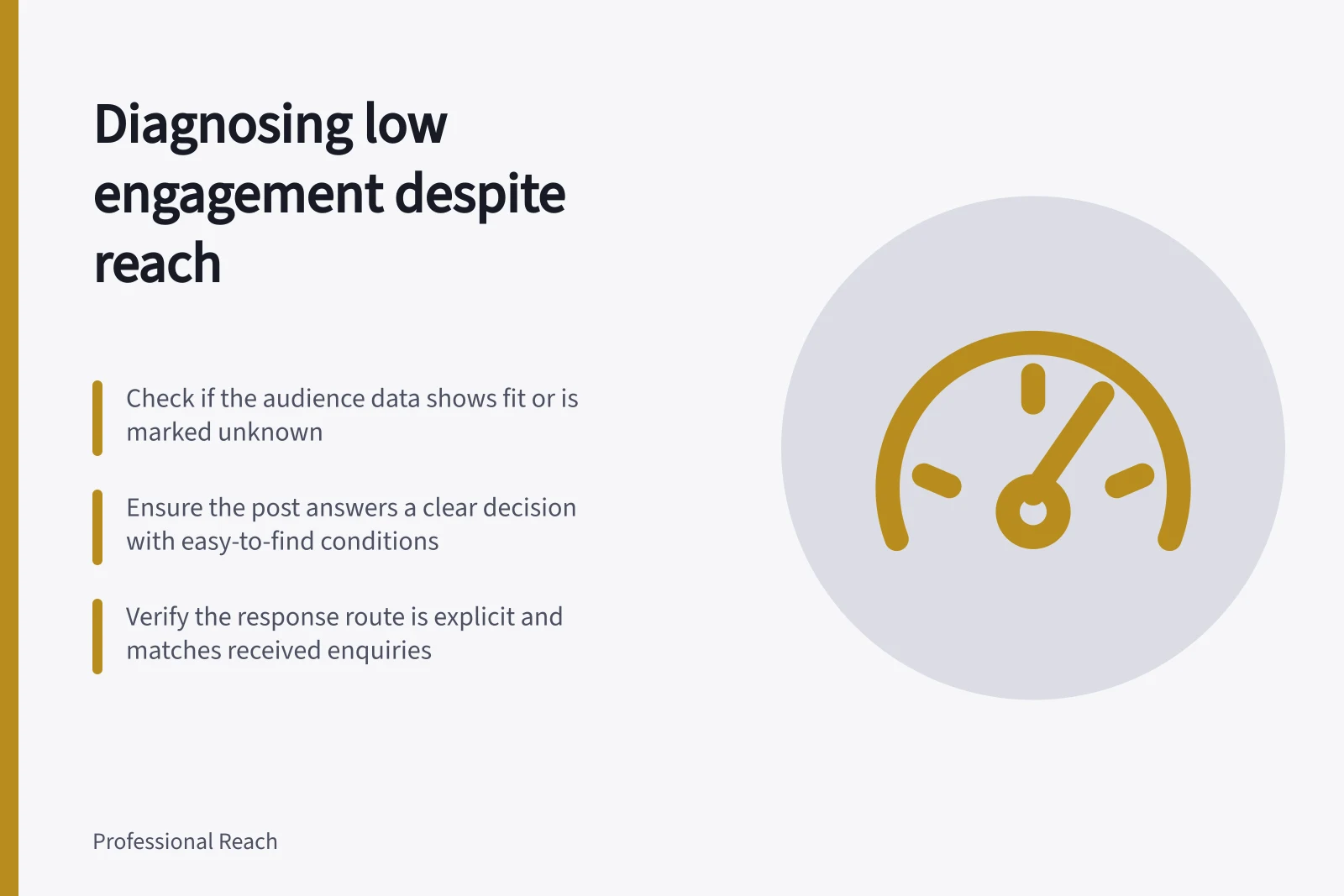
When a B2B post records reach but few relevant responses, investigate audience fit, the question addressed, the clarity of the answer and the route for a response. Reach cannot identify which explanation is right. A quiet comment thread does not show that readers disliked the post.
Check what the reach figure covers
Record the post, publishing identity, reporting period and paid distribution. Review available reach and impression figures, but do not treat them as evidence that the intended professionals encountered the post, read it or needed its answer.
Use audience information only within its scope. If the available data cannot show audience fit, mark it unknown.
Key Metrics to Assess B2B Post Effectiveness
- Reach
- Recorded but not indicative of audience fit or engagement
- Impressions
- May not reflect actual reading or relevance
- Audience Fit
- Only assessable within data scope; otherwise marked as unknown
- Response Rate
- Low count does not imply disinterest; examine context
Examine the answer and the responses
Put the intended reader question beside the published post. Can someone doing that work recognise the situation? Does the post answer a decision they face, and are important conditions easy to find? Ask an appropriate subject specialist to check a proposed correction.
Read the responses rather than treating their count as a diagnosis. A relevant question or correction may identify a missing part of the answer, but it represents the respondent. A reaction does not disclose its reason. A click count alone does not establish interest in a website resource.
Check whether a response was possible to observe
A complete explanation may give readers no reason to comment publicly. A reader may ask privately or return later. If the post proposes a next step, check whether that step is clear and suitable for the subject.
Inspect the organisation’s own received enquiries before saying none occurred. Do not infer buying intent from a save, follow or reaction.
| Question | Possible finding | Next check |
|---|---|---|
| Did the intended audience have an opportunity to see it? | Broad reach, uncertain audience fit. | Compare available audience categories with the brief, noting what they cannot show. |
| Did the post answer a decision? | It names a theme but leaves the decision vague. | Draft and verify a more specific answer. |
| Was the response route clear? | A next step is implied but its destination is unclear. | Check the destination and enquiries received. |
| Is there enough evidence for a pattern? | Few visible responses. | Examine comparable contributions before drawing a wider conclusion. |
Write the diagnosis as an observation, a plausible explanation and a next check. If the evidence is thin, say so. The purpose is to choose a sensible next investigation or editorial change without treating an exposure figure as a verdict.