Profile Craft
Part of Professional social writing
Ending a post without a forced engagement question
A professional post does not need to finish with “What do you think?” when the body has already made its point. Use the ending to complete the reader's …
A professional post need not finish with “What do you think?” when the body has already made its point. Use the ending to complete the reader's understanding rather than to manufacture a comment thread.
Choose the ending that fits the substance
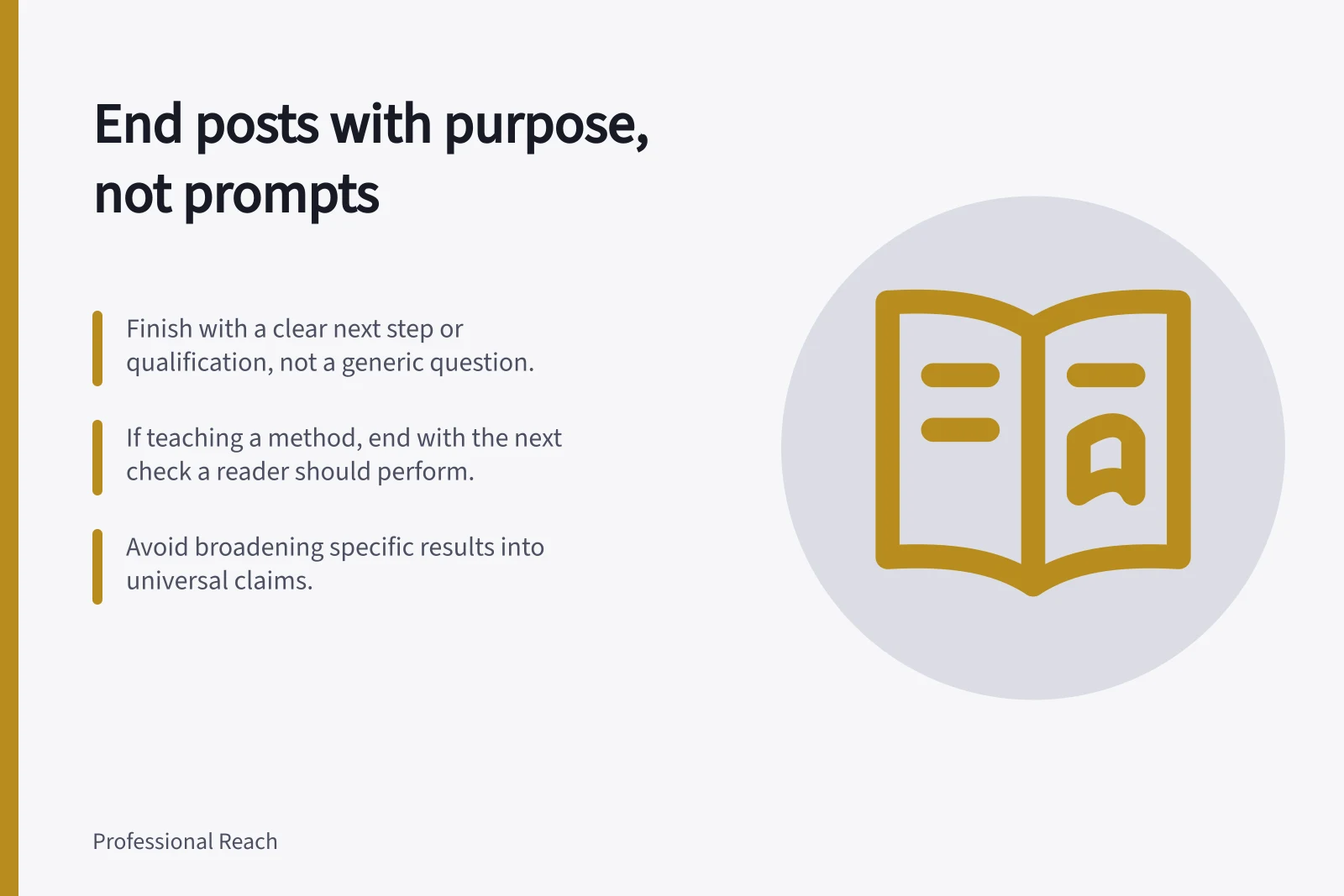
If the post teaches a method, finish with the next check a reader could perform. If it compares two options, state the condition that would change the choice. If it reports an observation, acknowledge the limit of what was measured. An open question works only when the writer genuinely wants informed answers and can supply enough context for them.
Read the last paragraph alone. Does it add a decision or a meaningful qualification? If it only repeats the opening, cut it.
If the post includes an example with a specific result, do not broaden that result into a claim about every organisation at the end.
A comment prompt is a choice, not a publishing requirement. Invite discussion when it helps the topic. Otherwise a precise final sentence gives readers more to take away than a generic request for engagement.
Key principles for effective post endings in Australian professional contexts
- Use open questions only when seeking informed answersNot required for every post
- Finish with a decision, qualification, or next stepAdds value beyond repetition
- Avoid broadening specific results into universal claimsMaintains integrity and compliance with privacy guidelines