Content Operations
Part of LinkedIn newsletters and long-form content
Separating a newsletter edition from a short post
Decide when a topic needs a complete LinkedIn newsletter edition, when one short post is enough, and how their roles can work together.
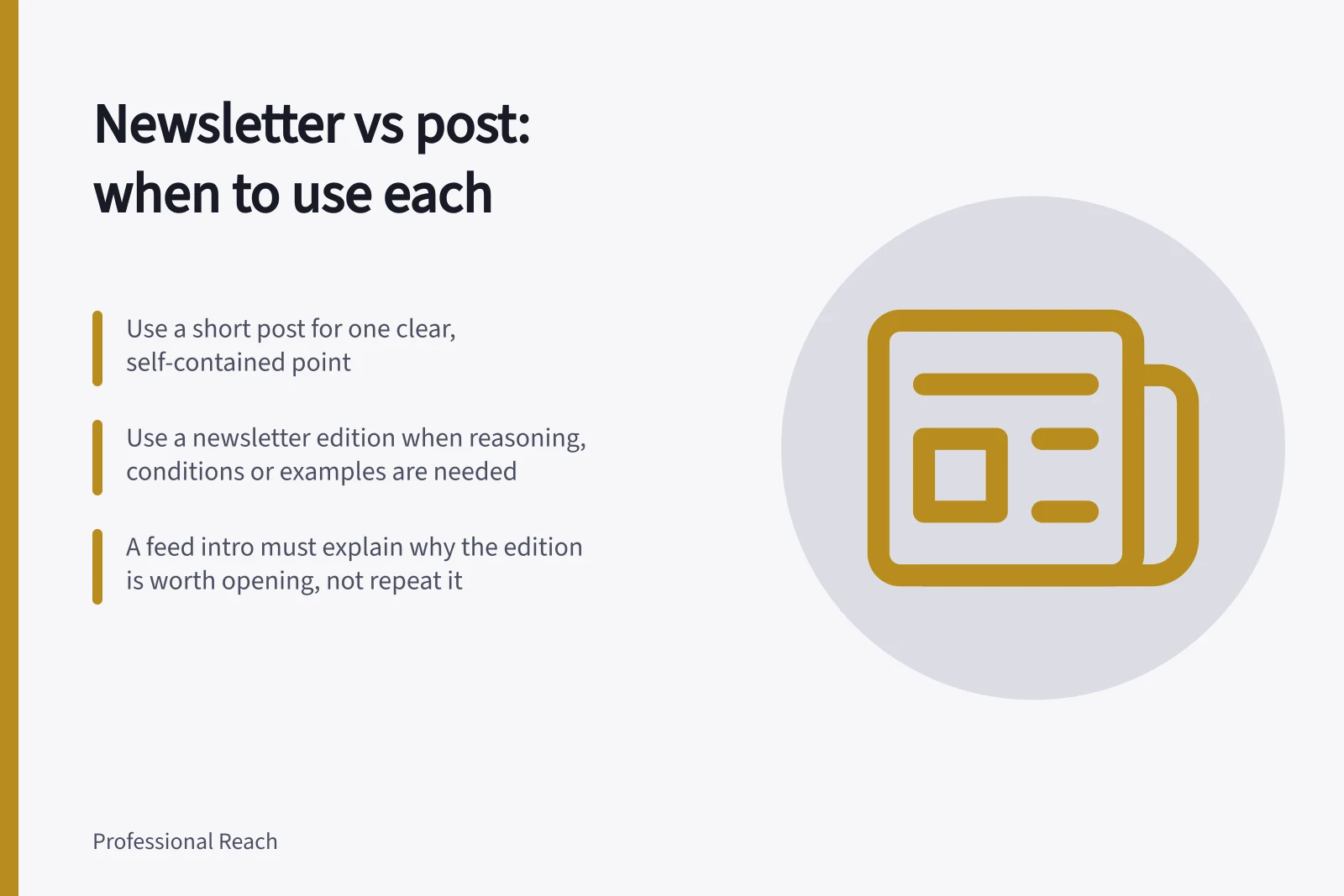
Use a short LinkedIn post when one clear point gives the reader what they need. Use a newsletter edition when the answer needs conditions, a worked example or important limits. A feed post introducing an edition has a separate purpose: it explains why the article is worth opening.
Test the depth of the question
Try stating the answer briefly. If that is fair and complete, a post may be enough. If readers still need to compare options, follow a process or understand exceptions, an article can carry that reasoning. This is a judgement about the reader's task, not a word-count rule.
Suppose the subject is approving an exception during a supplier handover. A short post could make one useful point: decide who owns approval before an exception arises. An edition could examine which cases need escalation, what information supports a decision and how that decision is recorded.
Added length should change what a reader understands or can do. Repeated introductions and generic conclusions do not turn a self-contained post into a useful edition.
Make the edition complete
An edition should answer its headline without relying on the feed introduction. Give the main answer early, explain when it applies and include the qualifications needed to use it responsibly. Add a scenario only when it clarifies a real choice.
Make the edition a self-contained piece, and check that the intended account and destination are selected before publishing.
Give the feed introduction its own job
When preparing a feed introduction for a published edition, use it to identify the reader and the decision covered by the article. It should accurately describe the edition without copying its full opening or promising material the article does not contain.
A separate short post can also stand alone when it has a distinct useful point. Someone who sees only that post should still understand its claim. Someone who opens the edition should find the deeper answer promised by its headline.
Read each piece independently before using both. If the edition adds no necessary depth, the post may be the better format. If its introduction cannot describe the edition clearly, sharpen the edition's question.