Content Operations
Part of LinkedIn company page content
Choosing a sustainable LinkedIn company Page posting rhythm
Set a LinkedIn company Page posting rhythm around useful material, review capacity and reader responses, then adjust it for a clear reason.
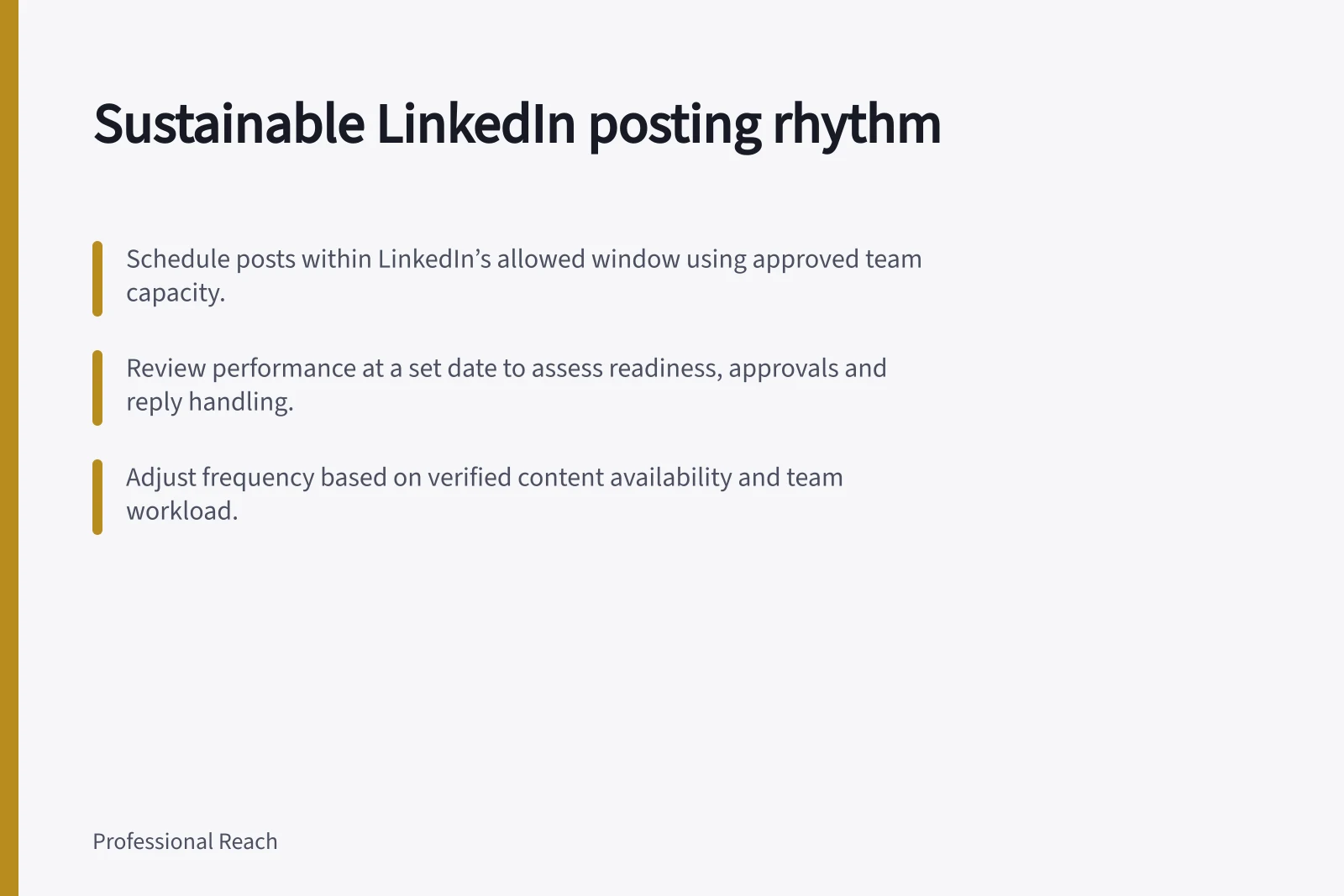
Choose a LinkedIn company Page cadence from the useful posts your team can prepare, approve and support with relevant replies. Check the Page’s scheduling window, trial the chosen interval to a review date set in advance, then keep or change it based on capacity and the work produced.
Count the work behind each post
For each post, count the work of finding a subject specialist, verifying facts, editing, securing approval and handling relevant replies after publication. Choose an interval the team can meet repeatedly without skipping checks or leaving questions unattended.
Separate material by urgency. A confirmed service change may need to go out when it affects people; an explanation of a recurring question can wait until its answer is checked; an industry interpretation needs current evidence. These subjects do not need identical deadlines.
Set a trial interval
Start with the most frequent interval the team can support with distinct, verified answers or necessary updates. One team might have capacity for a substantial answer each fortnight; that is an illustrative planning choice, not a LinkedIn minimum or a prediction of growth.
Set a review date before the trial starts and review on that date rather than letting the trial run indefinitely. Keep a small reserve of answers whose facts can be rechecked, and leave room for timely updates.
Before assigning dates, check LinkedIn Help’s “Schedule a LinkedIn Page post” for the current scheduling window and any restrictions for the relevant post type and workflow. Schedule posts only within the permitted window; keep the team’s plan aligned with what the Page can schedule.
Assign someone to confirm dates, availability and attached material close to publication.
Review the process and the response
At the review date, check whether posts were ready without skipped reviews, approvals arrived in time and relevant replies could be handled. Then ask whether the posts answered the questions they promised to address; note useful follow-ups, missing explanations and updates that left readers uncertain.
Use available LinkedIn Page analytics as one input when reviewing the process and the response. These measures do not identify an ideal frequency.
Do not compare a burst of announcements with an earlier period of explanations as though frequency were the only change. Topic, timing, audience and distribution may also differ. Sparse observations may justify keeping the interval while improving the material, rather than declaring a cadence successful or unsuccessful.
Increase frequency when more distinct, verified answers or necessary updates are available and the team can handle them. Reduce the commitment if slots repeatedly lead to weak subjects, missed checks or unattended questions. Otherwise, keep the interval and review again if material or team capacity changes.
Pros and cons of different posting frequencies
- Pros of higher frequency (e.g., weekly)More timely updates; stronger engagement with urgent topics like service changes or policy updates.
- Cons of higher frequencyRisk of skipped reviews, weak content, or unattended replies if team capacity is exceeded.
- Pros of lower frequency (e.g., fortnightly)More time for fact-checking, approval, and meaningful responses; sustainable for smaller teams.
- Cons of lower frequencyMay miss opportunities to address urgent issues promptly; risk of audience disengagement over time.