Profile Craft
Part of Professional social profile reviews
Updating a profile after a change in professional focus
Update a professional profile after a career shift while distinguishing current work, past experience and future direction.
After a change in professional focus, make three things clear: the work you do now, the direction you are pursuing and the past experience that supports it. An intended specialism should not appear as a role already held. Relevant earlier work can remain when its dates and context are clear.
Define the transition
Write one sentence about your previous work and one about your present work. If the new focus is still a goal, describe what you are learning or seeking, not current paid work. Identify the method, subject or responsibility that genuinely connects the two.
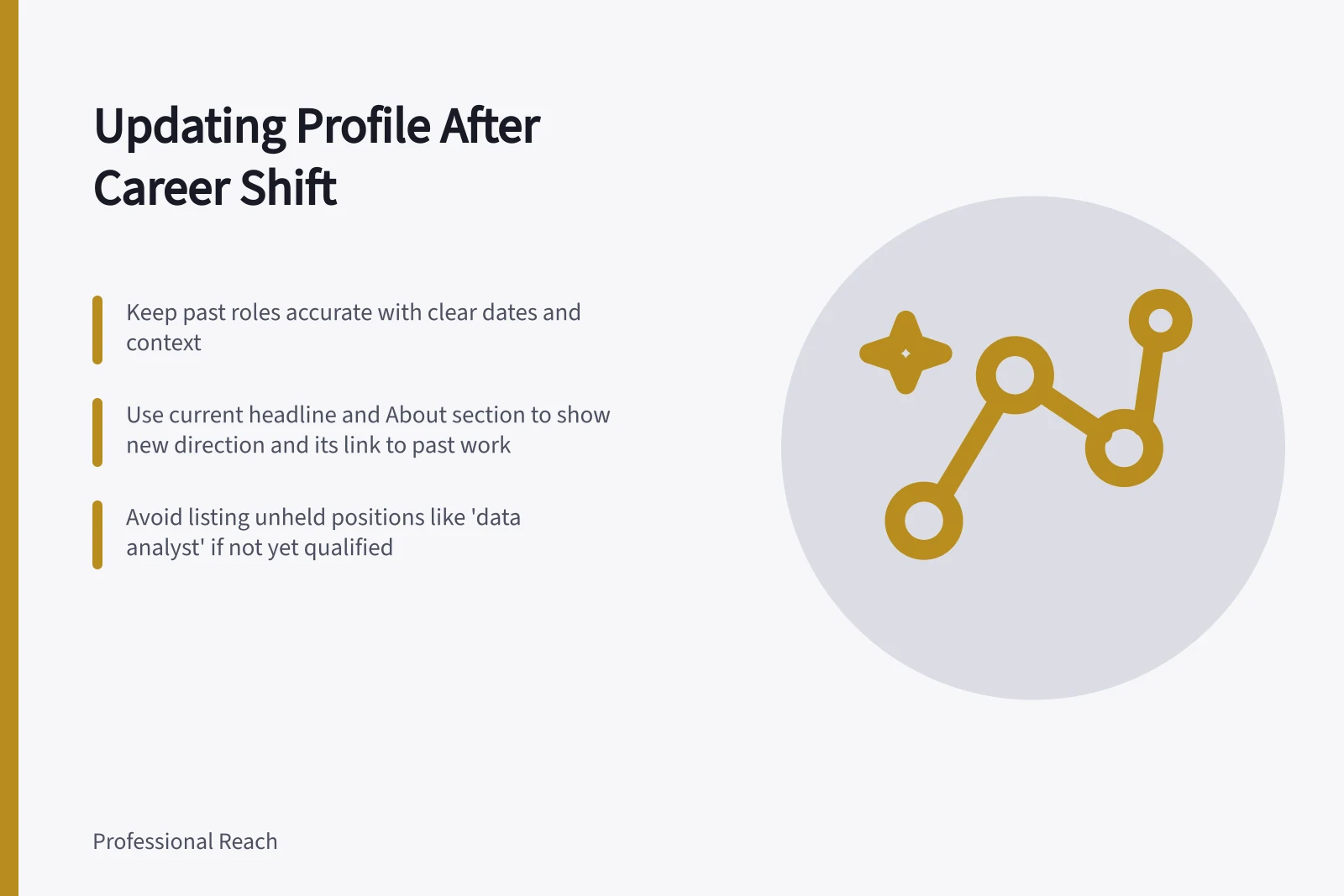
A project coordinator developing data analysis skills, for example, might still coordinate projects while learning to analyse their records. The profile can describe that present combination. It should not list a data analyst position the person has not held.
Balancing Past Experience and Future Goals in Your Profile
- Pros of including past relevant workDemonstrates transferable skills and methodological continuity; supports credibility of your new direction.
- Cons of misrepresenting current rolesListing an unheld role (e.g., 'Data Analyst') can mislead recruiters and damage professional trust.
Update the sections in sequence
Check Experience first. Keep accurate past positions and dates. Change the current position only if the work or professional relationship has changed.
Next, revise the headline and About section. Use them together to distinguish present work from intended direction. A headline can mention a developing focus when its wording makes that status clear; About can explain the connection to work already done. Read both against Experience before saving.
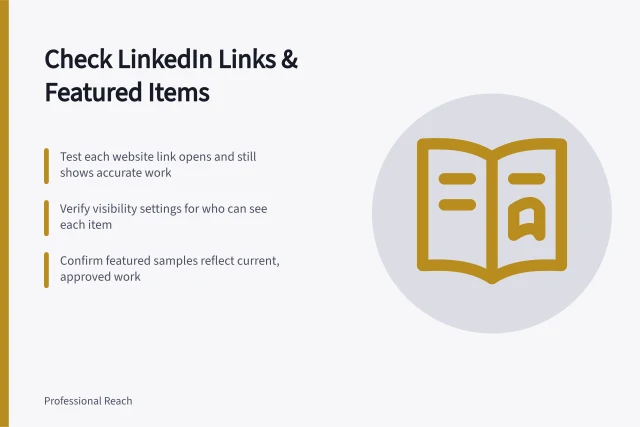
Then review skills, featured work samples and website links. Keep older material when it demonstrates a transferable method, with its period and your contribution clear.
Remove or reorder an item if it makes past work look like your current service. Do not make featured items the only explanation of the change; keep the main profile text clear on its own.
If you maintain a secondary language profile, check the version you use and update it where needed. If you also represent an organisation, make sure your profile does not imply a change to the organisation's offer; your career shift alone does not establish that.
Read the result as a visitor. Can someone distinguish your current work, earlier experience and intended next step without treating a plan as an accomplished role?
Updating Your Professional Profile After a Career Shift
- Review and update the Experience sectionKeep accurate past roles and dates. Only update current position if the work or relationship has changed.
- Revise your headline and About sectionUse both to clarify your current role and future direction. Ensure the transition is clear and grounded in real experience.
- Update skills, featured items, and linksRetain older work that shows transferable skills with clear context. Remove or reorder items that misrepresent your current focus.
- Verify secondary profiles and organisational representationEnsure language versions are updated. Confirm your personal shift does not imply changes to your organisation’s services.
- Review as a visitorCheck whether someone can clearly distinguish your current work, past experience, and intended next step without confusion.