Employee Advocacy
Adding useful context in comments
Learn how to add a useful condition, distinction or question to a professional comment without overclaiming or changing the subject.
Desk
Works on content routines, employee advocacy and marketing-sales collaboration.
Employee Advocacy
Learn how to add a useful condition, distinction or question to a professional comment without overclaiming or changing the subject.
Employee Advocacy
Write a short, truthful connection note that explains your shared professional context without a disguised sales pitch.
Content Operations
Set clear owners for B2B social ideas, claim reviews, author approval, publishing and corrections while keeping the approved version traceable.
Employee Advocacy
Decide when a LinkedIn connection is appropriate, explain the real context and keep the relationship useful after acceptance.
Content Operations
Connect LinkedIn newsletter issues through a clear series promise, useful context and distinct decisions without making new readers start at issue one.
Content Operations
Set a LinkedIn company Page posting rhythm around useful material, review capacity and reader responses, then adjust it for a clear reason.
Content Operations
Decide when a document post helps readers follow a process, give each page a purpose and check the file they can download.
Content Operations
Find a professional question with enough depth for a useful LinkedIn newsletter series, then test its audience, boundaries and sustainability.
Employee Advocacy
Get usable practitioner input with focused prompts, clear notes and a meaning check before drafting a B2B social post.
Company Pages
Choose between a LinkedIn company Page and an employee profile by checking who owns the claim, speaks for it and handles follow-up.
Content Operations
Group B2B social content by the reader problem and decision it addresses, then compare answer quality, responses and gaps.
Employee Advocacy
Plan related Page and employee posts with distinct reader questions, shared facts and clear timing while keeping each willing author's own voice.
Employee Advocacy
Verify an error, choose an edit or replacement, and make a material correction clear to readers.
Content Operations
Prepare and check captions for a short LinkedIn expert video, including SRT files and the limits of automatic caption review.
Employee Advocacy
Plan employee advocacy around willing contributors, accurate company facts and useful audience responses without turning personal profiles into posting targets.
Employee Advocacy
Create concise, verified fact cards with conditions and disclosure limits so employees can share informed views in their own words.
Content Operations
Understand what LinkedIn impressions show and assess comments, saves and enquiries against the purpose of an organic post.
Employee Advocacy
Invite employees to contribute expertise voluntarily, offer choices beyond posting, and keep personal profiles free of repost targets.
Content Operations
Build a dated record of public company claims with evidence, scope, owners, status and a route to review posts when facts change.
Content Operations
Make LinkedIn document slides easier to read on a phone by simplifying each page and checking contrast, reading order and the shared PDF.
Content Operations
Use LinkedIn newsletter views, sends and reader responses to assess continuing interest while respecting the limits of aggregate analytics.
Employee Advocacy
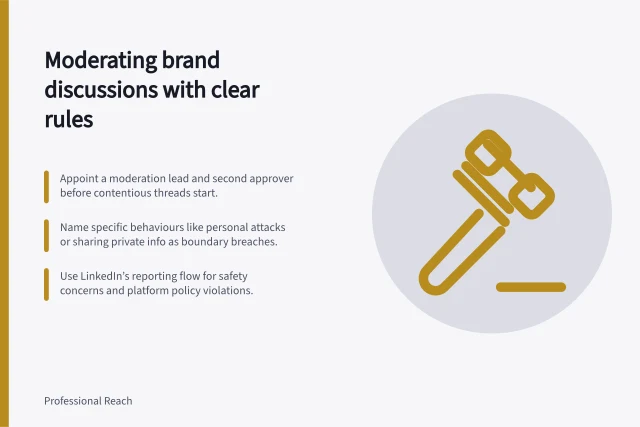
Set fair discussion rules, distinguish criticism from abuse, and choose the right LinkedIn comment controls for a brand thread.
Employee Advocacy
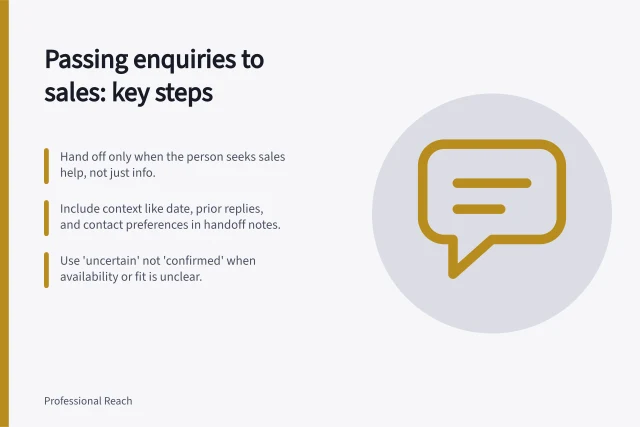
Decide when a social enquiry belongs with sales, pass the context needed to answer it and close the loop with the person.
Content Operations
Capture customer and industry questions with their context, verify an answer and turn suitable questions into useful LinkedIn Page posts.
Content Operations
Record the actual social question or action, separate assumptions and protect personal information before assigning a sales status.
Employee Advocacy
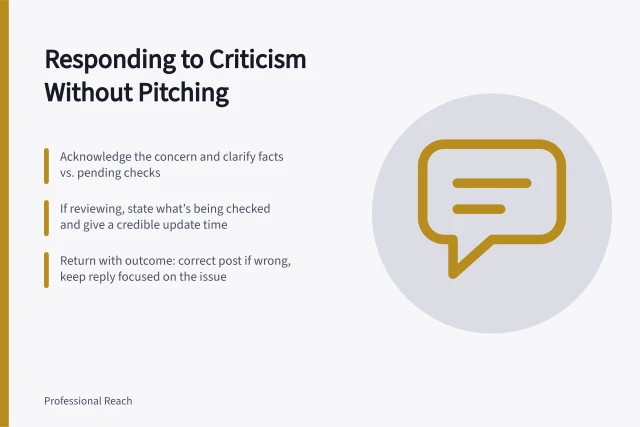
Address criticism in a professional social discussion with a specific answer, clear limits and a useful follow-up instead of a sales pitch.
Content Operations
Decide when a topic needs a complete LinkedIn newsletter edition, when one short post is enough, and how their roles can work together.
Content Operations
Tag organic LinkedIn links, verify a website enquiry event and interpret GA4 session attribution against contacts actually received.